
Joint hypothesis testing
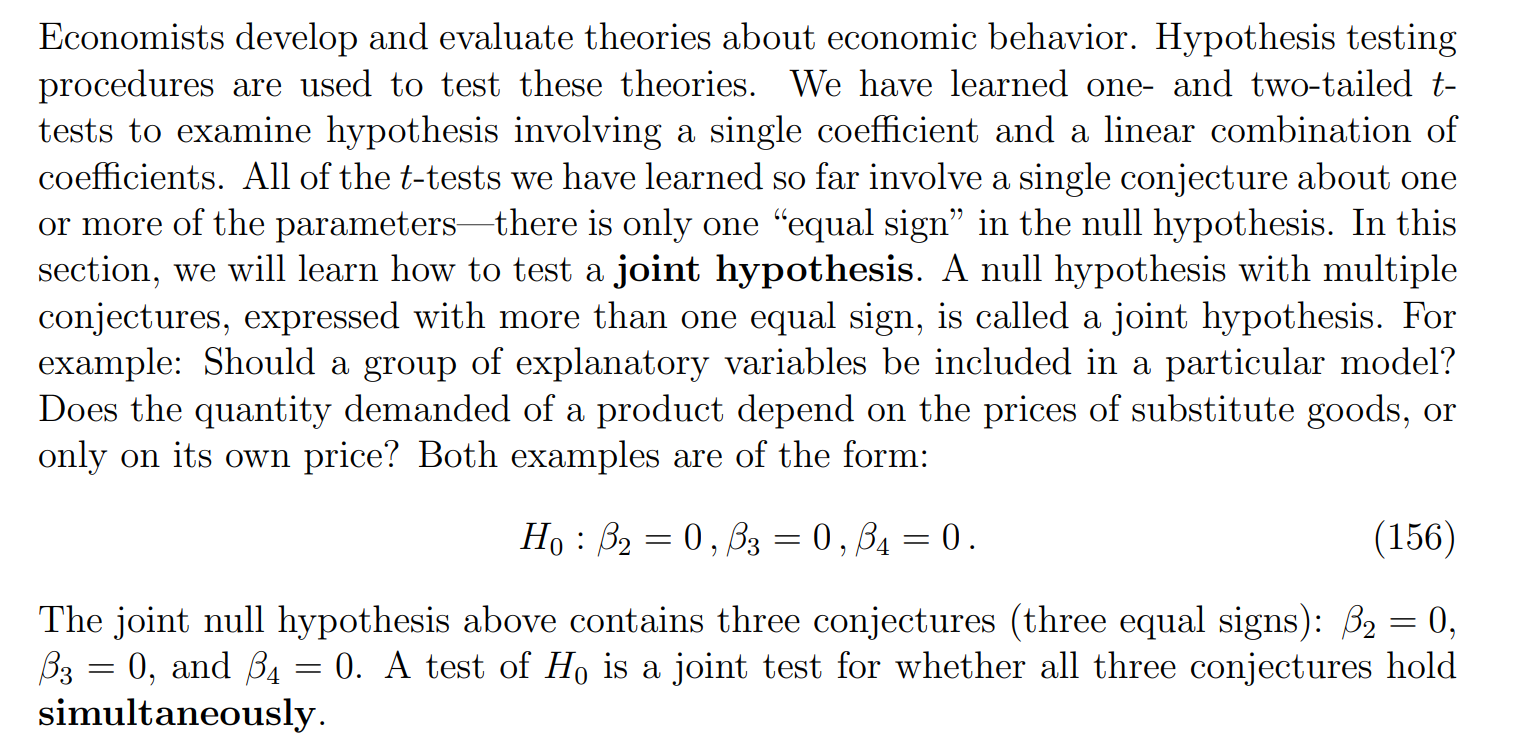
Simple null hypothesis → involves a restriction on one sign (<,=,>) only
Joint null hypothesis → involves two or more restrictions at the same time
Testing the effect of advertising: The F-test
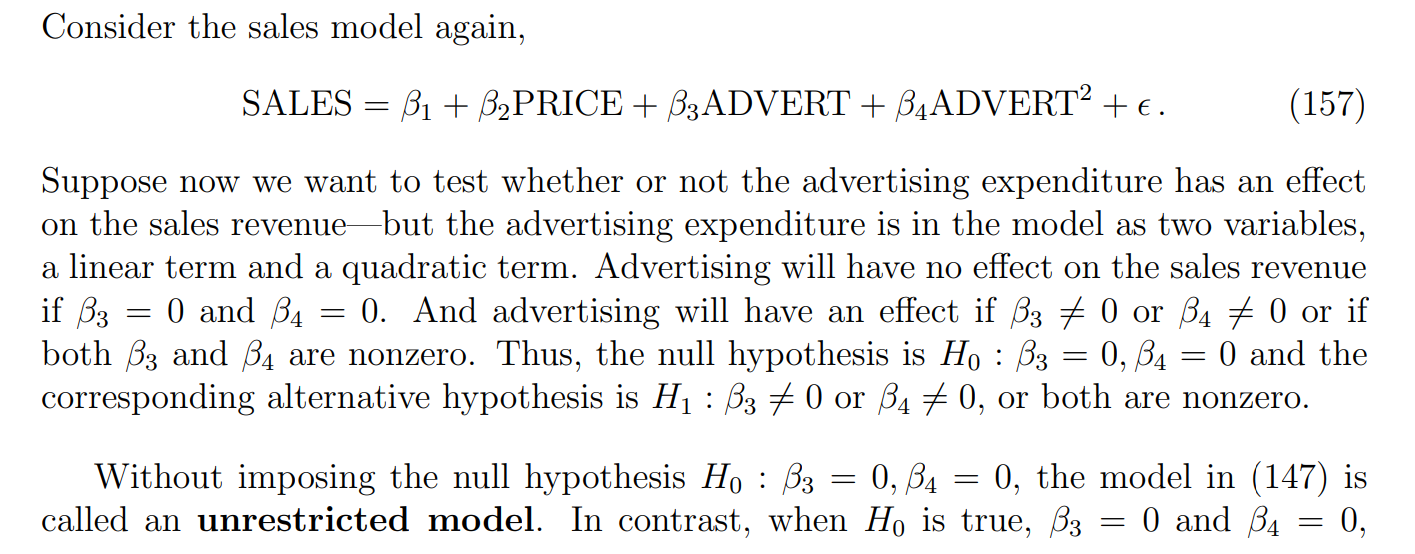
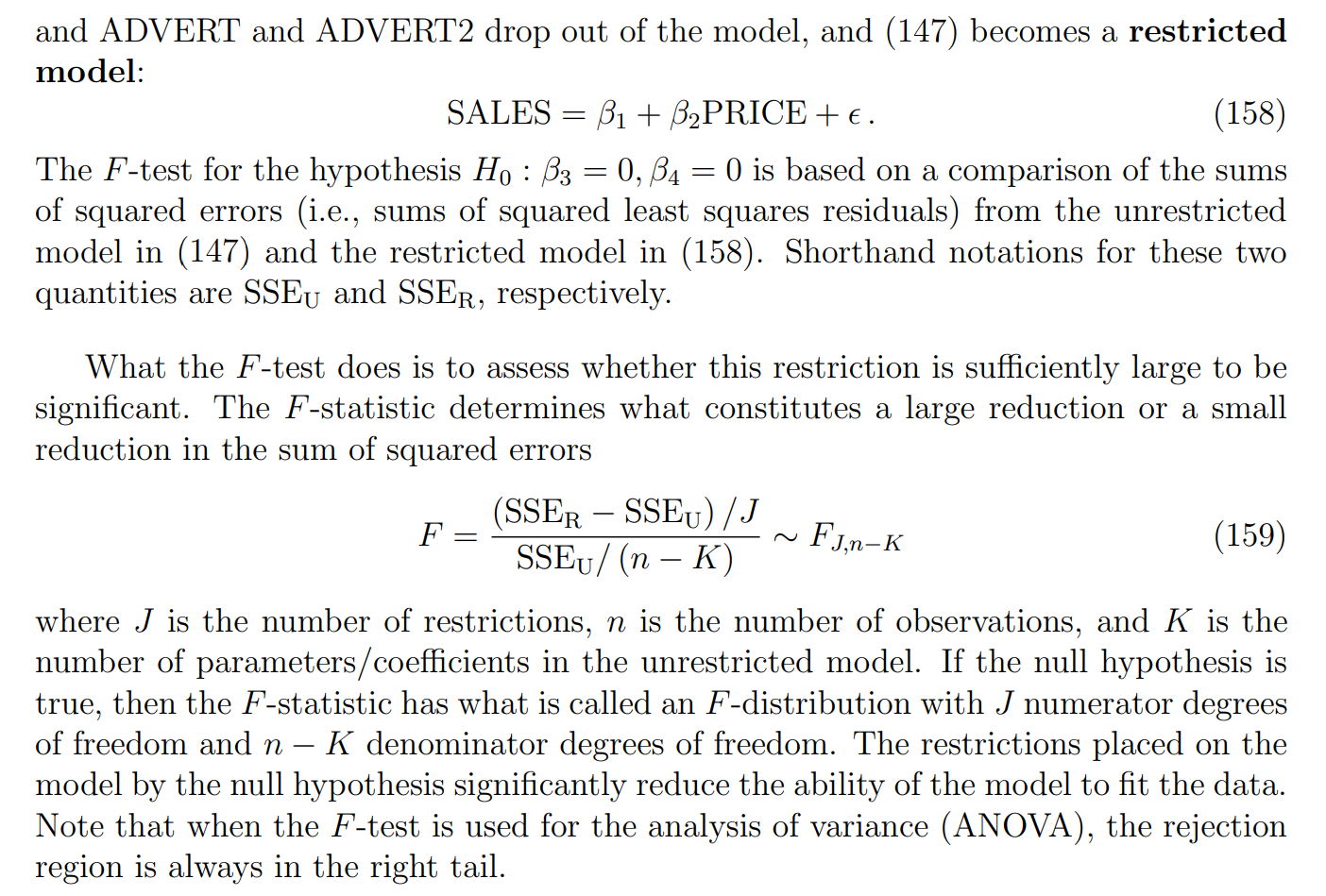
restricted model :
An unrestricted model is the “full” regression specification, where you estimate all parameters freely without imposing any restrictions. For example, if your regression is
then the unrestricted model estimates
all at once. A restricted model is the version of the model after you impose the null hypothesis restrictions. For instance, if
then the restricted model reduces to
because the restrictions eliminate
and from the regression.
Testing the overall significance of the model
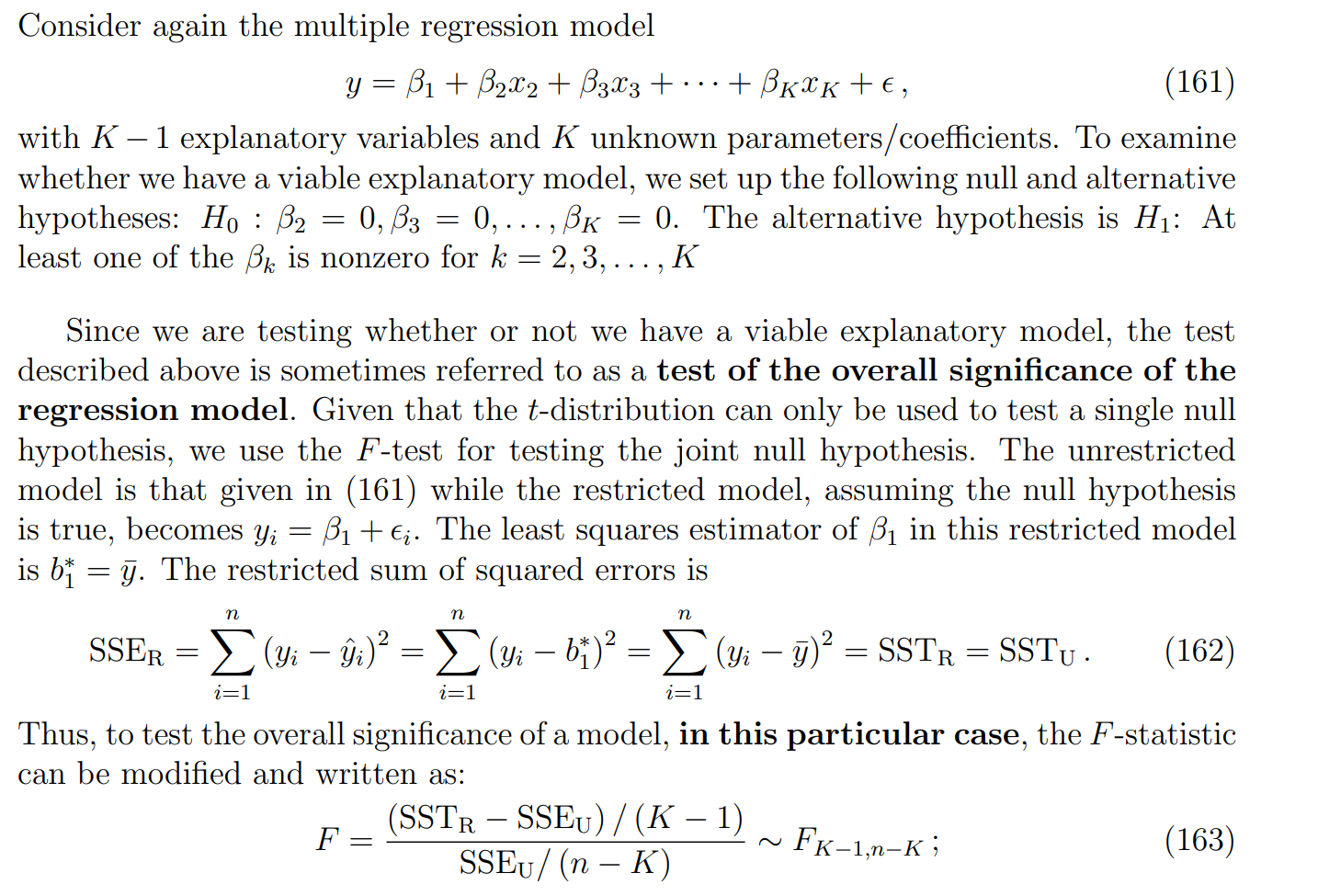
t-test and F-test
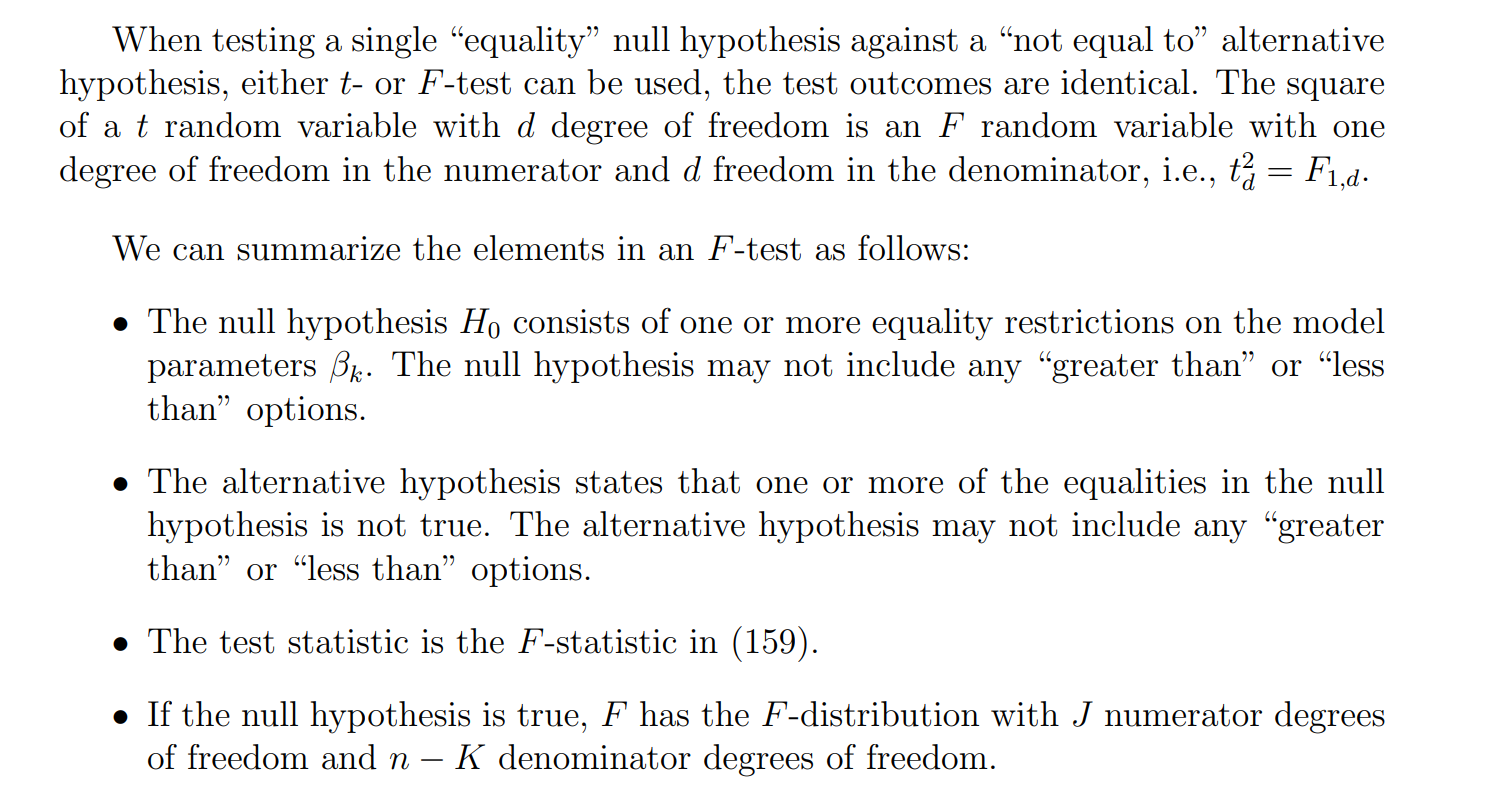
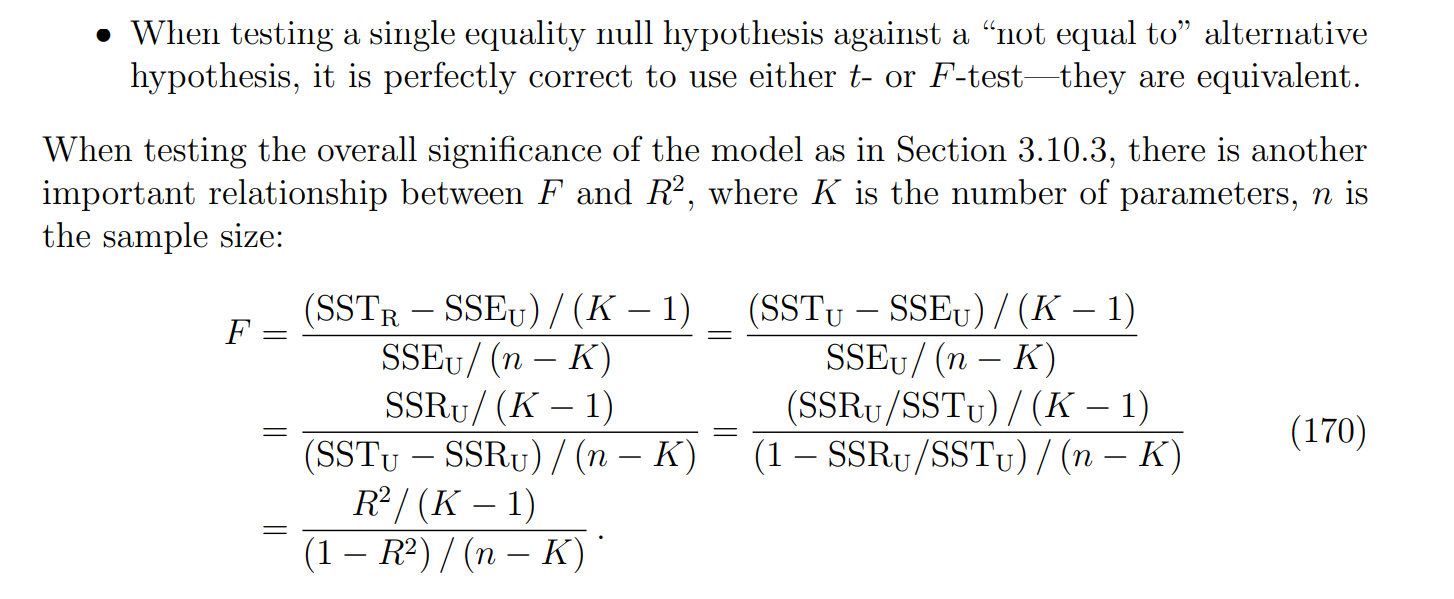
More general F-tests
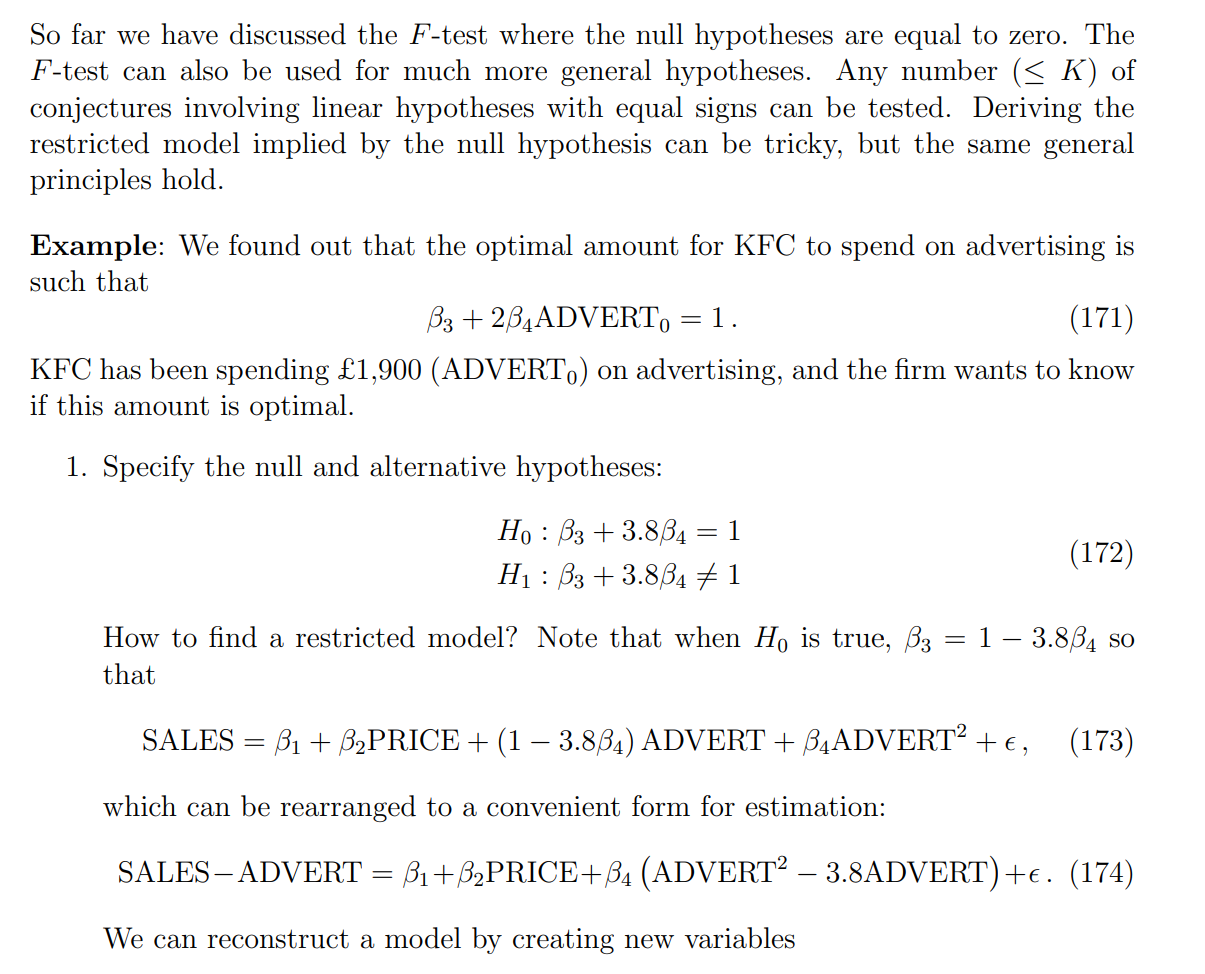
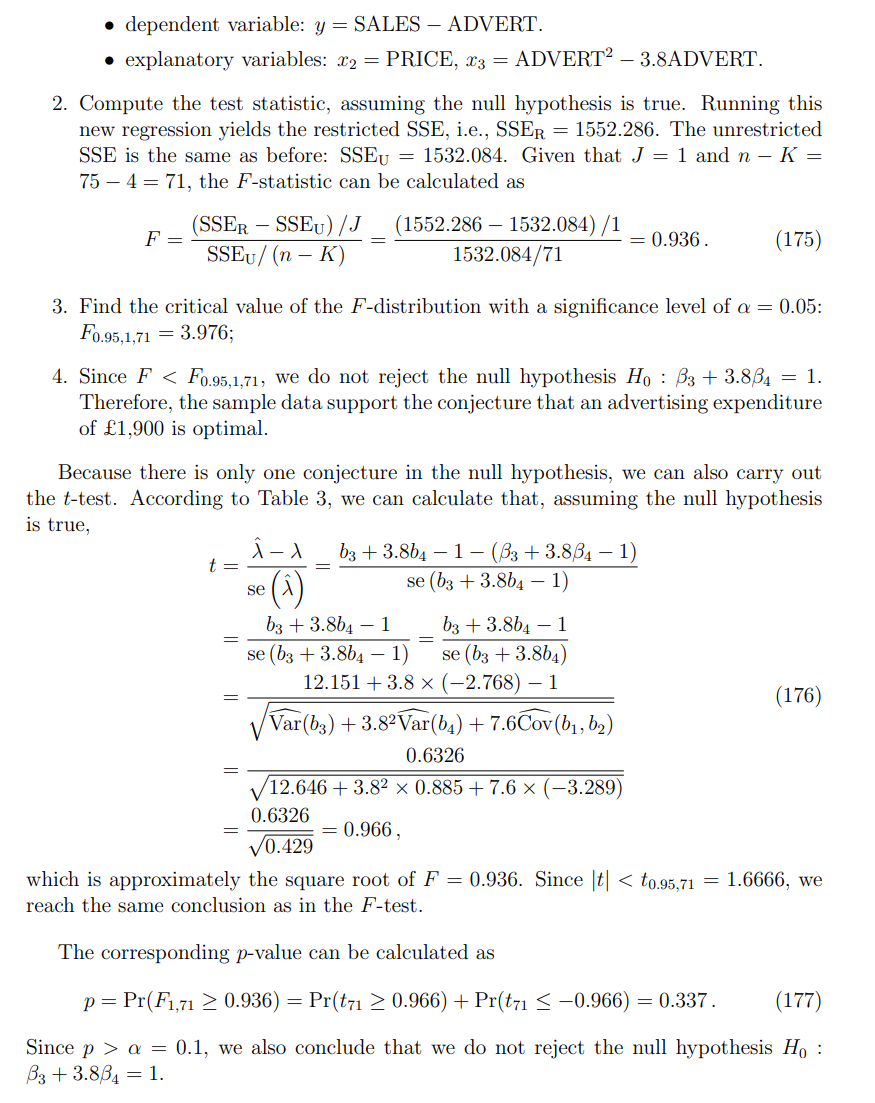
The F-test is the standard way to test any set of linear restrictions, not just “all equal to zero.”
Here the restriction links two parameters (
and together. That means you cannot just look at a single t-statistic — the test requires accounting for covariance between estimators. The F-test compares restricted model vs. unrestricted model fit:
Unrestricted model: estimate
freely. Restricted model: force
What “restricted model” really means
The restricted model is any regression model you get after imposing the null hypothesis.
If the null says
, then yes: the restricted model is simply dropping that variable. But in general, the null may say something else, e.g.
That is not a zero restriction, but it’s still a restriction on parameters.
So: restricted model ≠ only β=0. Instead, it means “the model under the null hypothesis.”
Why substitution is needed
When the null hypothesis involves a linear combination (like
You cannot just delete regressors, because neither
nor is zero. Instead, the restriction ties them together, so one becomes dependent on the other.
To build the restricted model, you must substitute that relationship back into the regression equation.
That’s why in your KFC example, they replaced
Substitution is exactly the way to re-express the restricted model so it still looks like a valid regression: